
 CH
CH
 INQUIRY

Products
Turning Machining Explained: Characteristics, Methods, and CNC Lathe Selection Guide
What is Turning Machining-Main Characteristics of Turning Machining-Representative Turning Machining Methods-Core Requirements for CNC Turning Machine Performance-Key Selection Points for CNC Lathes
Classification:
Product Description
Turning Machining Explained: Characteristics, Methods, and CNC Lathe Selection Guide
Amidst the rapid development of industries such as new energy, automotive parts, 3C electronics, and precision manufacturing, parts processing is evolving towards higher precision, higher consistency, and higher efficiency.
As one of the most fundamental and widely used cutting processes, turning machining remains irreplaceable in precision parts manufacturing. This article will begin by exploring the basic characteristics and representative methods of turning process, and then, in conjunction with practical applications, analyze the key points for selecting CNC lathes for turning operations.
What is Turning Machining?
Turning is a metal cutting process where the workpiece rotates as the primary motion, and the cutting tool performs linear or curved feed motion. It is mainly used for machining various rotating parts, such as shafts, sleeves, and discs.
Turning machining is typically performed on a lathe machine. CNC lathes, with their high-precision control and stability, have become the mainstream turning equipment, widely used in industries such as new energy, automotive, mold making, precision hardware, and 3C electronics.

Main Characteristics of Turning Machining
1. Suitable for Machining Rotating Parts
Turning machining, based on rotary motion, is suitable for machining rotating surfaces such as outer diameters, inner holes, end faces, and conical surfaces. It is the preferred process for manufacturing shafts and sleeves.
2. High Machining Accuracy and Stable Surface Quality
Under reasonable process parameters and stable equipment conditions, turning machining can achieve high dimensional accuracy and good surface roughness, meeting the machining requirements of precision parts.
3. Flexible Processes and Strong Adaptability
By changing tools and adjusting programs, a single CNC lathe can complete multiple machining operations, suitable for multi-variety, small-batch, and medium-batch production needs.
4. High Requirements for Equipment Rigidity and Stability
During turning machining, the cutting force acts continuously on the workpiece and tool. The rigidity of the machine bed, the stability of the spindle, and the accuracy of the feed system directly affect the machining quality and consistency.
Representative Turning Machining Methods
1. External Turning: Used for machining the outer cylindrical surface of shaft parts. This is the most common turning method, widely used in motor shafts, drive shafts, automotive parts, etc.
2. Internal Turning: Used for machining the inner surface of hole parts. It requires high precision of the lathe spindle and stability of the feed system. Commonly used in motor housings and precision sleeve parts.
3. Face Turning: Face turning ensures the flatness and perpendicularity of the end face of the part. It is an important process in the machining of disc and shaft parts.
4. Thread Turning: Utilizing the precise linkage of the spindle and feed in a CNC system, various standard and non-standard threads can be machined. Commonly used in automotive connecting parts and mold standard parts.
5. Grooving and Parting-off Machining: Mainly used for machining grooved structures of parts or separating finished products. It requires high equipment rigidity and tool stability.
Core Requirements for CNC Turning Machine Performance
With the advancement of precision manufacturing, different industries have placed higher common demands on turning machine:
High overall structural rigidity to effectively suppress cutting vibration
Smooth spindle system operation, suitable for medium- and high-speed continuous machining
High feed system accuracy and reliable repeatability
Good stability, suitable for long-term batch production
Convenient operation and maintenance, reducing overall operating costs
These factors are the key indicators for judging whether a CNC lathe is suitable for precision turning.
Key Selection Points for CNC Lathes in Practical Applications (SZGH Lathe Machines Example)
1. Machining of Small Precision Parts: SZGH-25 CNC Lathe
In industries such as 3C electronics and precision hardware, parts are generally characterized by small size, high precision, and concentrated batch production.
The SZGH-25 CNC lathe has a compact structure and sensitive response, making it suitable for precision turning of small shafts and structural parts, effectively improving productivity per unit area while ensuring machining accuracy.

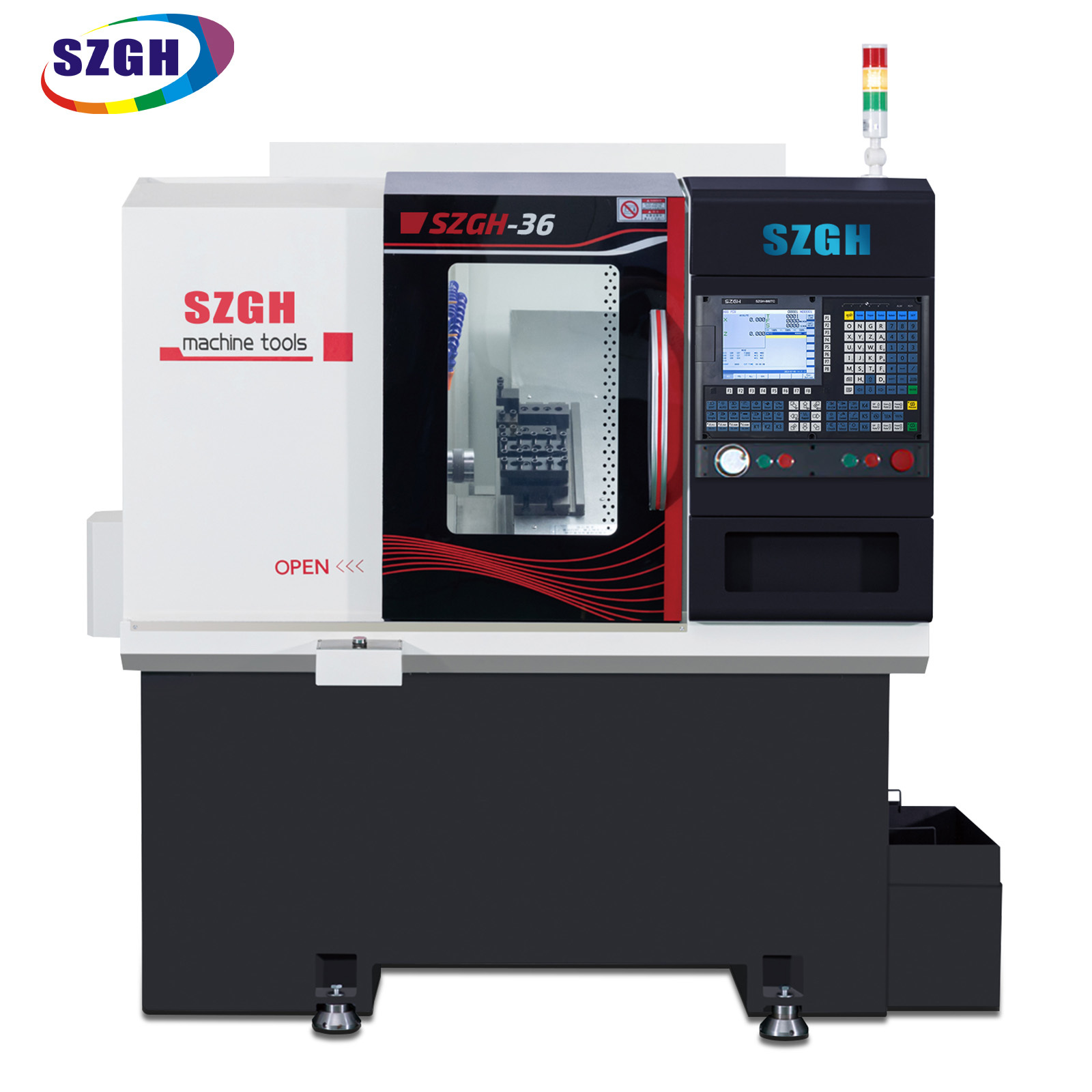
2. Multi-Specification General-Purpose Machining: SZGH-36J CNC Lathe
Industries such as new energy, motors, and mold components typically have machining needs involving multiple specifications and frequent changes.
The SZGH-36J CNC lathe achieves a good balance between rigidity, stability, and machining adaptability, capable of handling various turning operations such as external turning, internal turning, and threading, suitable for multi-variety, small-batch, and medium-batch production scenarios.

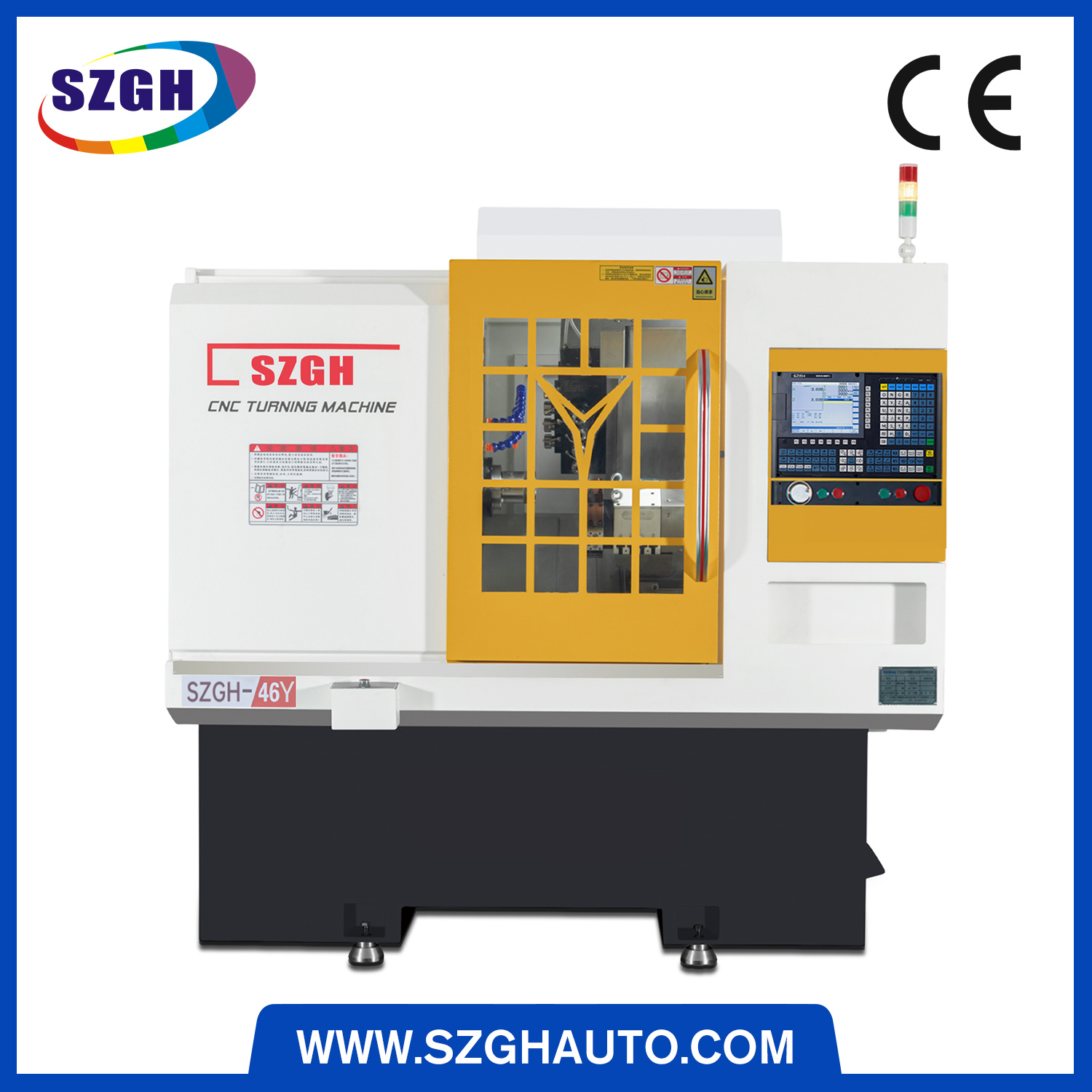
3. Medium-to-Large Size and High Stability Machining: SZGH-46J CNC Lathe
In fields such as automotive parts and new energy structural components, parts are relatively large, requiring higher rigidity and continuous machining capabilities from the equipment. The SZGH-46J CNC lathe possesses strong overall rigidity and spindle stability, making it suitable for high-efficiency, high-consistency turning of medium-to-large parts, meeting the requirements for long-term stable operation.

Turning machining is one of the most fundamental and critical process methods in precision manufacturing. As industries continuously increase their requirements for precision, efficiency, and consistency, selecting a CNC lathe that truly matches their machining needs has become a crucial step for enterprises to enhance their competitiveness.
By deeply understanding the technological characteristics of turning and rationally selecting CNC lathes of different specifications, such as the SZGH-25, SZGH-36J, and SZGH-46J, based on actual application scenarios, you can achieve more efficient and stable production while ensuring machining quality.
If you are planning to upgrade or expand your turning capabilities, we welcome you to share your application details, workpiece drawings, and production requirements with us. Our engineering team will assist you in selecting the most suitable SZGH CNC lathe model and provide customized solutions tailored to your specific needs.


Follow us


Fax:+86-755-61885186


what app&We chat ID: +86-18098966732

Address: Floor 3, Building 5, Southern Digital Innovation Industry Base, No.80 Puxia Road, Henggang Liuyu Community, Longgang District, Shenzhen

SAF Coolest v1.3.1.2 设置面板 GQWSD-ZIXF-XAAEE-AZS
无数据提示
Sorry, the current column is being updated, please look forward to it!
You can view other columns or returnHome Page