
 CH
CH
 INQUIRY

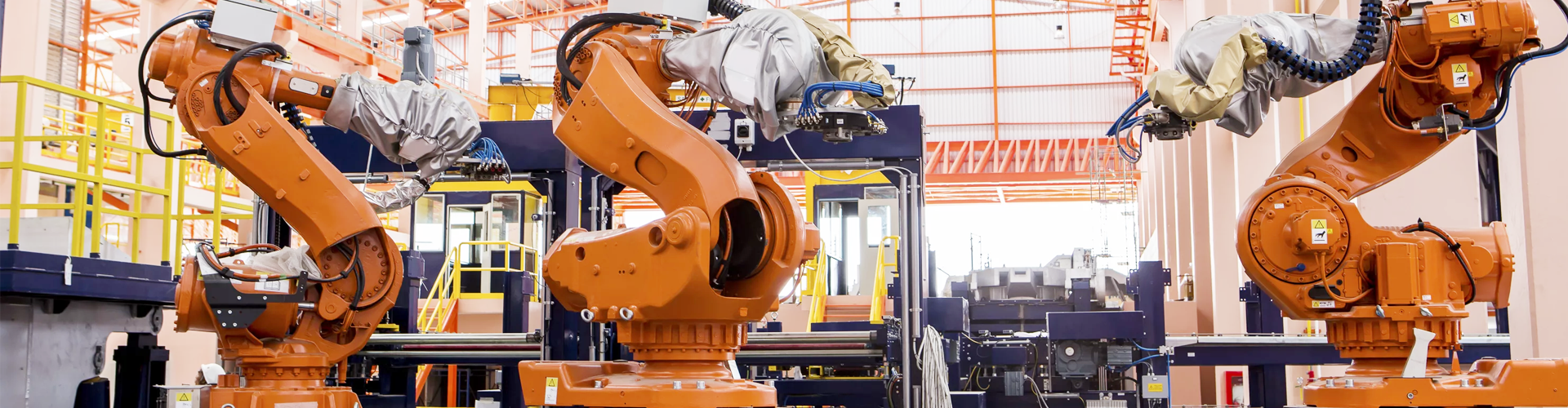
SZGH-T1600-10C 6-Axis Industrial Robot for CNC Machine Tending and Factory Automation
Learn how the SZGH-T1600-10C 6-axis industrial robot improves CNC machine tending, material handling, palletizing, and factory automation while helping manufacturers reduce labor costs and increase productivity.
Case description
SZGH-T1600-10C 6-Axis Industrial Robot for CNC Machine Tending and Factory Automation
Introduction
Across the global manufacturing industry, companies are facing growing pressure to increase production efficiency while controlling operating costs. Labor shortages, rising wages, and increasing demands for product consistency have made traditional manual production methods more difficult to sustain.
For many CNC machining workshops, operators spend a significant portion of their day loading raw materials, unloading finished parts, transporting workpieces, and performing repetitive handling tasks. While these operations are essential, they often create bottlenecks that limit machine utilization and overall productivity.
As a result, more manufacturers are investing in industrial automation solutions to improve efficiency and reduce reliance on manual labor. One of the most effective approaches is integrating a 6-axis industrial robot into existing production lines.
The SZGH-T1600-10C 6-Axis Industrial Robot is designed to help manufacturers automate CNC machine tending, material handling, palletizing, assembly, and other repetitive production processes. With a 10 kg payload, 1510 mm reach, and ±0.05 mm repeatability, it provides a practical solution for factories seeking greater flexibility and long-term productivity improvements.
Why More Manufacturers Are Adopting Industrial Robots
In many machining and fabrication facilities, labor shortages have become a serious operational challenge. Recruiting and retaining skilled operators is increasingly difficult, particularly for repetitive tasks and night-shift production.
For example, a CNC workshop running multiple machines may require several operators simply to load and unload parts throughout the day. During peak production periods, labor availability can directly affect delivery schedules.
Industrial robots help address these challenges by performing repetitive tasks consistently and continuously. Unlike manual operations, robotic systems can maintain stable cycle times without fatigue, helping manufacturers improve production planning and equipment utilization.
Common Challenges in Manual Production
- Labor shortages and high employee turnover
- Rising labor costs
- Inconsistent product quality
- Limited night-shift productivity
- Machine downtime caused by operator availability
- Difficulty scaling production capacity
By implementing robotic automation, manufacturers can reduce these limitations while creating a more stable production environment.
What Is the SZGH-T1600-10C 6-Axis Industrial Robot?
The SZGH-T1600-10C is an all-in-one industrial robot developed for flexible manufacturing applications. Its six-axis structure allows the robot to move freely in three-dimensional space, enabling it to perform complex tasks from multiple angles.
Unlike fixed automation equipment designed for a single operation, the SZGH-T1600-10C can be adapted for various production requirements by changing end-of-arm tooling and software programs.
Key Specifications
Specification | Value |
Robot Model | SZGH-T1600-10C |
Number of Axes | 6 |
Payload Capacity | 10 kg |
Maximum Reach | 1510 mm |
Repeatability | ±0.05 mm |
Installation Type | Ground Mounted |
Structure | Integrated Design |
Application Types | CNC Tending, Material Handling, Palletizing, Assembly |

alt="SZGH-T1600-10C 6-axis industrial robot for factory automation"
How the SZGH-T1600-10C Improves CNC Machine Tending
One of the most common applications for industrial robots is CNC machine tending.
In many machining workshops, CNC equipment remains idle while operators load or unload workpieces. Even small delays can significantly reduce overall machine utilization over time.
The SZGH-T1600-10C can be integrated as a CNC loading and unloading robot to automate this process.
Typical CNC Automation Workflow
- Pick raw material from rack
- Load material into CNC machine
- Wait for machining cycle completion
- Remove finished component
- Place part on conveyor or tray
- Repeat automatically
This workflow reduces manual intervention while keeping machines running more consistently.
Real Manufacturing Example
A metal machining company producing automotive components integrated the SZGH-T1600-10C between two CNC lathes.
Before Automation
- 2 machine operators
- Average loading cycle: 95 seconds
- Frequent machine waiting time
After Automation
- 1 operator supervising two machines
- Average loading cycle: 78 seconds
- Increased machine utilization
- Reduced labor requirements
Although results vary by application, robotic machine tending often helps manufacturers improve throughput while maintaining production consistency.
High Precision Supports Consistent Product Quality
Speed alone does not guarantee manufacturing success. Product quality and process stability remain equally important.
The SZGH-T1600-10C provides:
±0.05 mm\pm0.05\ mm±0.05 mm
repeatability, helping manufacturers maintain accurate positioning during long production runs.
Benefits of High Precision
- Improved CNC loading accuracy
- Reduced fixture positioning errors
- More consistent assembly processes
- Better palletizing accuracy
- Lower scrap and rework rates
Because the robot follows the same programmed path every cycle, production quality becomes less dependent on operator experience.
Flexible Applications Beyond CNC Automation
The SZGH-T1600-10C is not limited to machine tending. Its flexible six-axis structure allows it to support multiple manufacturing processes.
Material Handling
The robot can transfer components between:
- CNC machines
- Production conveyors
- Storage racks
- Inspection stations
- Assembly cells

alt="industrial material handling robot in manufacturing production line"
Palletizing Operations
The robot can automatically stack:
- Finished products
- Cartons
- Components
- Industrial parts
This reduces repetitive lifting tasks while improving stacking consistency.
Assembly Automation
The robot can assist with:
- Component placement
- Pick-and-place operations
- Adhesive dispensing
- Product transfer
Welding and Deburring
With its six-axis flexibility, the robot can maintain proper tool orientation while following complex paths during welding and finishing processes.
Easy Integration with Existing Production Lines
Many manufacturers hesitate to invest in automation because they assume production lines must be completely redesigned.
In reality, the SZGH-T1600-10C can often be integrated into existing facilities with minimal disruption.
The robot can work alongside:
- CNC lathes
- CNC machining centers
- Conveyors
- Rotary tables
- Vision systems
- Inspection equipment
Its 1510 mm reach allows a single robot to serve multiple workstations, reducing equipment investment costs.

alt="CNC loading and unloading robot operating beside machining center"
Why the All-in-One Design Reduces Total Ownership Cost
When evaluating automation projects, manufacturers should consider more than the purchase price.
Important cost factors include:
- Installation
- Integration
- Programming
- Maintenance
- Downtime
- Labor savings
- Productivity improvements
The integrated design of the SZGH-T1600-10C helps simplify deployment and reduce engineering complexity.
For many factories, this translates into:
- Faster commissioning
- Lower integration costs
- Reduced maintenance requirements
- Shorter return-on-investment periods
Future Trends in Manufacturing Automation
Industry trends show increasing adoption of robotic automation across machining, fabrication, and assembly industries.
Manufacturers are investing in automation not only to reduce labor costs but also to improve production stability and operational flexibility.
As smart manufacturing continues to evolve, robots are becoming a standard component of modern production systems.
Companies that automate repetitive tasks today are often better positioned to respond to future labor and market challenges.
Conclusion
The SZGH-T1600-10C 6-Axis Industrial Robot provides manufacturers with a practical automation solution for CNC machine tending, material handling, palletizing, and factory automation.
By combining flexible motion control, a 10 kg payload, a 1510 mm working reach, and high positioning accuracy, the robot helps manufacturers improve productivity, reduce labor dependency, and maintain consistent production quality.
For companies seeking a scalable and cost-effective automation solution, the SZGH-T1600-10C offers an effective path toward smarter manufacturing and long-term operational efficiency.
Every manufacturing facility has different production requirements, machine layouts, and automation goals. Whether you are planning to automate CNC machine tending, material handling, palletizing, assembly, or other industrial processes, our engineering team can help evaluate the most suitable solution for your application.
Based on your requirements, SZGH can provide a tailored automation solution, technical recommendations, and a detailed quotation to help you evaluate the project more efficiently.
👉 Contact our automation specialists today to discuss your application and receive a customized solution proposal.
Frequently Asked Questions
Q1:What industries can use the SZGH-T1600-10C?
A1:The robot is suitable for CNC machining, automotive manufacturing, metal fabrication, electronics assembly, material handling, and palletizing applications.
Q2:Can the robot work with existing CNC machines?
A2:Yes. The robot can be integrated with most CNC lathes and machining centers through customized automation solutions.
Q3:Is the robot suitable for palletizing?
A3:Yes. Its 10 kg payload and flexible motion control make it suitable for light-to-medium palletizing applications.
Q4:How does robotic machine tending reduce labor costs?
A4:The robot automates repetitive loading and unloading operations, allowing operators to focus on higher-value production tasks.
Q5:What makes a 6-axis robot more flexible than fixed automation?
A5:A six-axis robot can move from multiple angles and adapt to changing production requirements without major mechanical modifications.
Inquiry Message
INQUIRY

Follow us


Fax:+86-755-61885186


what app&We chat ID: +86-18098966732

Address: Floor 3, Building 5, Southern Digital Innovation Industry Base, No.80 Puxia Road, Henggang Liuyu Community, Longgang District, Shenzhen

SAF Coolest v1.3.1.2 设置面板 GQWSD-ZIXF-XAAEE-AZS
无数据提示
Sorry, the current column is being updated, please look forward to it!
You can view other columns or returnHome Page