
 CH
 INQUIRY

Products
4-Axis vs. 3-Axis CNC Machining: Which Fits Your Production Line?
Compare 4-axis and 3-axis CNC machining for accuracy, setup time, cost, and production efficiency. Learn how to choose the right CNC milling machine for your factory.
Classification:
Product Description
4-Axis vs. 3-Axis CNC Machining: Which One Fits Your Production Line?
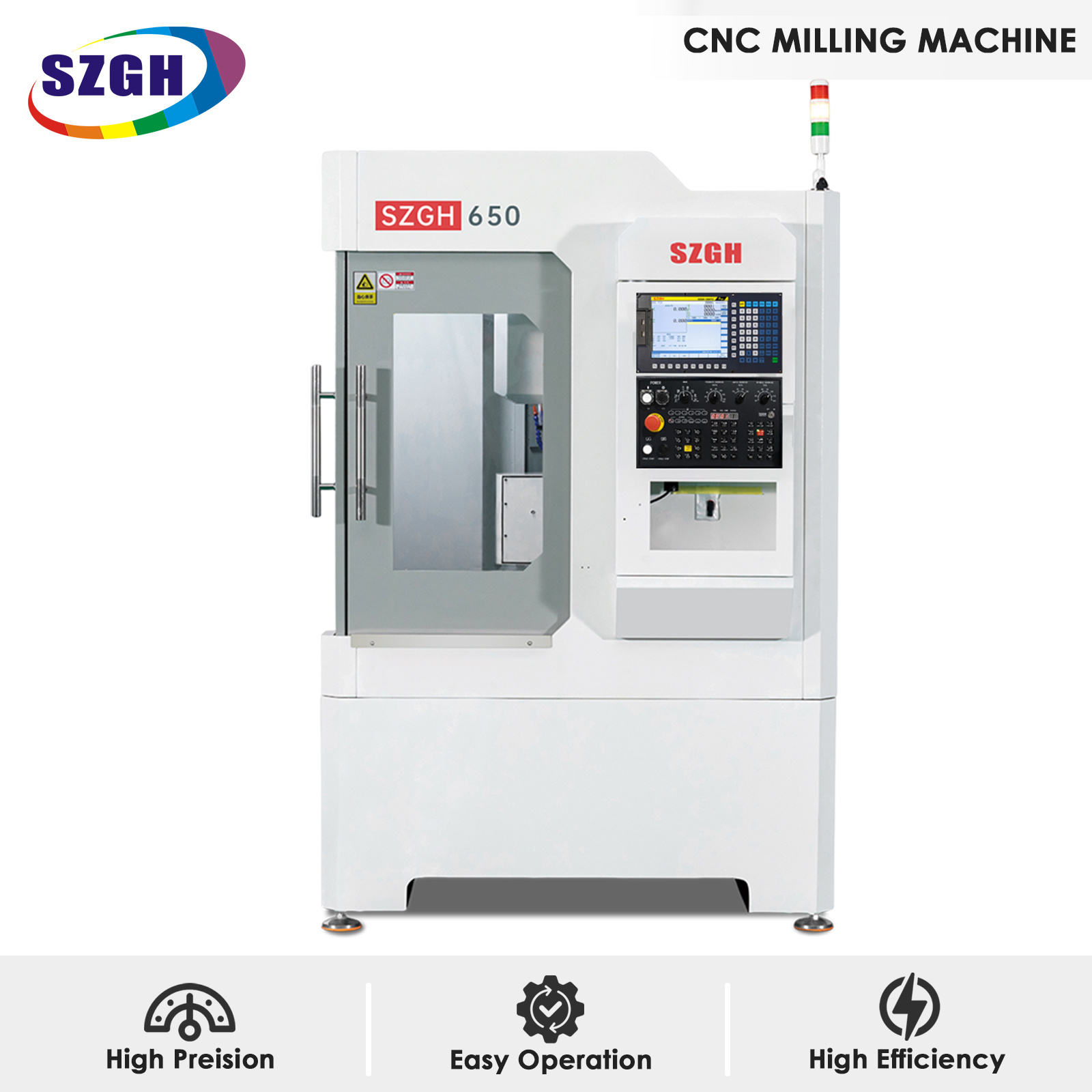
For manufacturers working with complex metal components, choosing the right CNC milling machine directly affects machining accuracy, cycle time, labor cost, and long-term production flexibility. A 3-axis CNC milling machine may be the most practical choice for standard prismatic parts, flat surfaces, slots, and drilled features. However, when parts require multiple side machining, tighter positioning consistency, or reduced manual repositioning, a 4-axis CNC milling machine can deliver measurable advantages. For factory owners, automation engineers, and equipment buyers, the key question is not simply which machine is more advanced, but which one fits the production line, part geometry, budget, and future order requirements.
Understanding 3-Axis CNC Machining
A 3-axis CNC milling machine moves the cutting tool along three linear axes: X, Y, and Z. These axes allow the machine to cut across the length, width, and depth of a workpiece.

Common Applications of 3-Axis CNC Milling
A 3-axis CNC milling machine is widely used for:
- Flat surface milling
- Slotting and pocketing
- Drilling and tapping
- Mold base machining
- Simple aluminum, steel, and brass components
- Low-to-medium complexity parts
For many workshops, 3-axis machining remains the foundation of high-precision metal fabrication because it offers a good balance between cost, accuracy, and ease of operation.
Advantages of 3-Axis CNC Machines
The main benefit of a 3-axis CNC milling machine is operational simplicity. It is easier to program, easier to maintain, and usually less expensive than a 4-axis system.
Key advantages include:
- Lower initial investment
- Shorter operator training time
- Simple fixture requirements
- Suitable for general milling tasks
- Easier maintenance and troubleshooting
- Broad availability of tooling and CAM support
For companies producing plates, brackets, housings, simple molds, and basic mechanical parts, 3-axis machining can provide stable productivity without unnecessary machine complexity.
Understanding 4-Axis CNC Machining
A 4-axis CNC milling machine adds a rotary axis, usually called the A-axis, to the standard X, Y, and Z movements. This rotary axis allows the workpiece to rotate during machining, enabling the cutting tool to access multiple sides of the part without manual repositioning.

Common Applications of 4-Axis CNC Milling
A 4-axis CNC milling machine is often used for:
- Shaft components
- Spiral grooves
- Cam profiles
- Aerospace brackets
- Medical device components
- Automotive transmission parts
- Multi-side aluminum or steel housings
- Precision parts requiring repeated angular positioning
In high-precision metal fabrication, the fourth axis can reduce setup errors and improve dimensional consistency across multiple machined faces.
Advantages of 4-Axis CNC Machines
Compared with a 3-axis CNC milling machine, a 4-axis CNC milling machine improves efficiency when parts need machining on several sides.
Main benefits include:
- Fewer manual setups
- Better positioning repeatability
- Shorter cycle time for multi-side parts
- More complex geometry capability
- Reduced fixture changes
- Improved consistency between part surfaces
For production lines handling complex or repeat orders, these advantages can reduce total cost per part even if the machine investment is higher.
3-Axis vs. 4-Axis CNC Milling: Technical Comparison
Factor | 3-Axis CNC Milling Machine | 4-Axis CNC Milling Machine |
Motion | X, Y, Z linear axes | X, Y, Z plus rotary A-axis |
Best for | Flat and simple prismatic parts | Multi-side and cylindrical parts |
Programming | Easier | More advanced CAM setup required |
Fixture complexity | Moderate | Lower for multi-side parts, but rotary setup required |
Setup time | Higher for multi-face parts | Lower for multi-face parts |
Investment cost | Lower | Higher |
Operator skill | Basic to intermediate | Intermediate to advanced |
Accuracy risk | Manual repositioning may introduce error | Better consistency across faces |
Production fit | General workshop machining | Complex, repeatable, higher-efficiency production |
When a 3-Axis CNC Milling Machine Is the Right Choice
A 3-axis CNC milling machine is suitable when your production focuses on simple geometries and cost control. If most parts can be machined from one or two orientations, 3-axis machining may be enough.
Choose 3-Axis CNC Machining If:
- Your parts are mostly flat, rectangular, or simple block-shaped components
- Production volume is low to medium
- Operators have limited multi-axis programming experience
- Budget is a major purchasing factor
- Setup time is not the main bottleneck
- You machine mostly plates, covers, brackets, and basic molds
For example, a factory producing mounting plates for automation equipment may not need a 4-axis CNC milling machine. A well-configured 3-axis CNC milling machine with quality tooling, rigid structure, and accurate ball screws can meet tolerance and productivity targets.
When a 4-Axis CNC Milling Machine Is the Better Fit
A 4-axis CNC milling machine becomes valuable when your parts require angular features, multiple machined faces, or repeated repositioning on a 3-axis machine.
Choose 4-Axis CNC Machining If:
- Your parts require machining on three or more sides
- Manual repositioning causes tolerance problems
- You produce shafts, cylindrical parts, or curved profiles
- You need to reduce fixture changes
- Your production volume justifies faster cycle times
- Your customers require tighter dimensional consistency
A practical example is a workshop machining valve bodies. On a 3-axis CNC milling machine, the operator may need to stop the process, loosen the fixture, rotate the part, realign it, and restart machining. Each setup increases labor time and introduces alignment risk. With a 4-axis CNC milling machine, the workpiece can rotate automatically, allowing multiple features to be machined in one clamping operation.
Accuracy and Repeatability Considerations
In high-precision metal fabrication, accuracy is not only about machine positioning. It also depends on workholding, tool deflection, thermal stability, spindle performance, and operator process control.
A 3-axis CNC milling machine can achieve high accuracy when parts are simple and properly fixtured. However, when a part must be removed and re-clamped several times, cumulative error becomes a concern.
A 4-axis CNC milling machine reduces this issue by keeping the part in one setup for more operations. This improves:
- Concentricity between features
- Angular positioning accuracy
- Surface-to-surface alignment
- Repeatability across production batches
For parts with strict tolerance requirements, fewer setups often mean fewer rejected parts.
Cost Evaluation: Machine Price vs. Total Production Cost
Many buyers compare only the purchase price, but this can lead to the wrong decision. A 4-axis CNC milling machine costs more upfront, but may reduce labor, fixture cost, inspection time, and scrap rate.
Cost Factors to Review
Before selecting a machine, evaluate:
- Average part complexity
- Number of setups per part
- Annual production volume
- Operator labor cost
- Fixture design cost
- Scrap rate caused by repositioning
- CAM software and training requirements
- Expected future product mix
If your team machines complex parts every day, a 4-axis CNC milling machine may pay for itself through shorter cycle times and lower rework. If complex parts are rare, a 3-axis CNC milling machine may deliver better return on investment.
Production Line Integration Checklist
Before purchasing a 3-axis or 4-axis CNC milling machine, review the following technical points:
- Required worktable size and travel range
- Spindle power and maximum speed
- Tool magazine capacity
- Controller compatibility with existing programs
- Servo motor response and positioning accuracy
- Machine rigidity for steel or hard alloy cutting
- Coolant and chip removal design
- Rotary axis load capacity for 4-axis machining
- CAM software support for multi-axis toolpaths
- After-sales service and spare parts availability
This checklist helps buyers avoid selecting a machine based only on axis count. A high-quality 3-axis machine may outperform a low-rigidity 4-axis machine in certain applications.
Implementation Advice for Factory Buyers
If you are upgrading from manual milling or basic 3-axis equipment, start by analyzing your current part drawings. Count how many setups each part requires and identify where errors occur.
A useful evaluation process includes:
1. Group parts by geometry and tolerance requirements.
2. Calculate current machining time and setup time.
3. Identify parts requiring repeated rotation or re-clamping.
4. Estimate scrap and inspection costs.
5. Compare production results using 3-axis and 4-axis machining plans.
6. Review operator training and CAM programming needs.
This approach gives a clearer answer than choosing a machine based only on specifications.
Conclusion: Match the Machine to the Production Goal
A 3-axis CNC milling machine is a practical and cost-effective choice for general milling, flat components, simple housings, and standard workshop production. A 4-axis CNC milling machine is better suited for multi-side parts, cylindrical features, reduced setup time, and higher consistency in high-precision metal fabrication.
The right CNC milling machine depends on your part complexity, production volume, tolerance requirements, and long-term automation strategy. If your current process loses time in manual repositioning or struggles with alignment accuracy, 4-axis machining may be the better investment.
To select the most suitable CNC machine tool for your production line, contact our technical team for a customized machining solution, or download our product catalog to compare CNC milling machine models, controller options, spindle configurations, and automation-ready features.


Follow us


Fax:+86-755-61885186


what app&We chat ID: +86-18098966732

SZGH group address: Floor 3, Building 5, South Digital Innovation Industrial Base, No. 80, Puxia Road, Liuyue Community, Henggang Street, Longgang District, Shenzhen City, Guangdong Province, China
