 CH
 INQUIRY


Products
Core Structure of CNC Lathes Explained: Which Configurations Truly Affect Turning Accuracy?
Classification:
Product Description
Core Structure of CNC Lathes Explained: Which Configurations Truly Affect Turning Accuracy?
In the field of precision manufacturing, many users encounter a real problem: CNC lathes with seemingly similar parameters can exhibit significant differences in actual turning accuracy, stability, and lifespan.
The reason lies not in whether or not a lathe machine is CNC-equipped, but in whether the lathe machine's core structure and key configurations truly match the turning requirements.
This article will start with the key structures of CNC lathes, analyzing which configurations truly determine turning accuracy and long-term stability. Combined with the practical application of the SZGH CNC lathe, it will help users gain a clearer understanding of the equipment.

Why is the "Structure" of a CNC Lathe Machine More Important Than Parameters?
In actual selection, many customers are easily attracted by the following factors:
* How high is the spindle speed?
* How good are the positioning accuracy parameters?
* How rich is the configuration list?
However, what truly affects the results in long-term turning is often:
* Whether the equipment has sufficient rigidity?
* Whether the structure is reasonably stressed?
* Whether the core components are stable over the long term?
Lathe machine structure determines the upper limit; parameters are merely the manifestation.
This is why CNC lathes with mature structural designs can maintain stable turning accuracy even after many years of use.
Bed Structure: The Foundation Determining CNC Lathe Machine Stability
1. The Influence of Bed Rigidity on Turning Accuracy
The bed is the core component of a CNC lathe, bearing all cutting forces.
During turning, cutting forces continuously act on the bed. Insufficient rigidity can easily lead to:
* Machining vibrations
* Dimensional fluctuations
* Accuracy drift after prolonged turning
Especially in industries such as new energy, automotive parts, and precision hardware, continuous machining places extremely high demands on bed stability.
2. SZGH CNC Lathe Bed Design Concept
The SZGH CNC lathe emphasizes overall rigidity and force balance in its structural design. Through a reasonable bed structure layout, it effectively improves vibration resistance, providing a stable foundation for precision turning.
SZGH-25: Compact structure, suitable for high-stability machining of small precision parts.
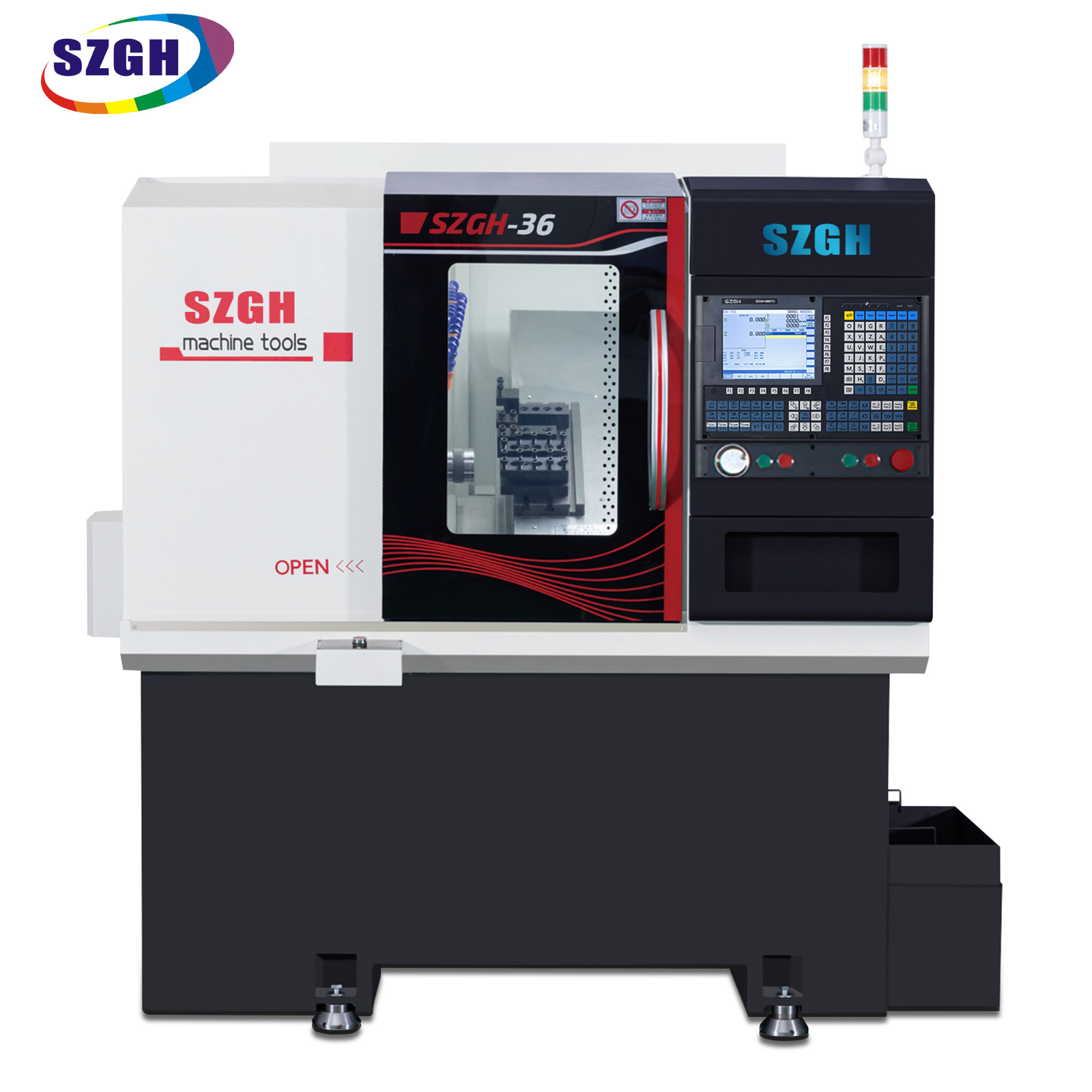
SZGH-36J: Balances rigidity and versatility, suitable for machining parts of various specifications.
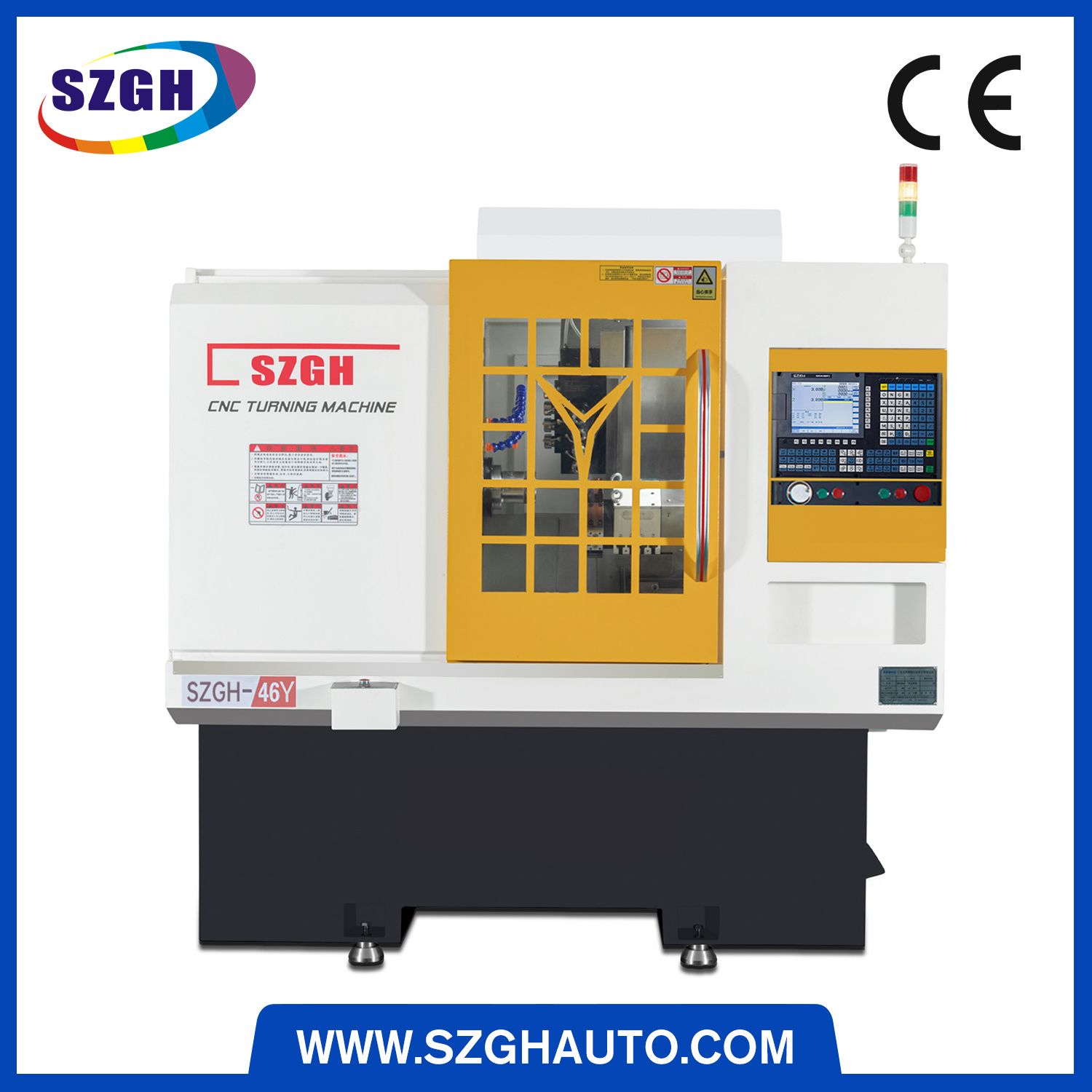
SZGH-46J: Higher bed rigidity, suitable for medium and large parts and continuous production scenarios.
Spindle System: The Core Source of CNC Lathe Machine Precision and Efficiency
1. Spindle Stability is More Important than "High Speed"
The spindle is the core motion unit in turning machining.
In practical applications, the spindle's stability, coaxiality, and thermal stability are often more critical than simply its maximum speed.
An unstable spindle may lead to:
Deteriorating surface roughness
Poor coaxiality of inner and outer circles
Dimensional changes after prolonged machining
2. Different Industries' Needs for Spindles
3C Electronics, Precision Hardware: Greater focus on stability under micro-feed
New Energy, Motor Industry: Greater focus on consistency in continuous machining
Automotive Parts: Greater focus on load capacity and long-term operational reliability
SZGH CNC lathes prioritize smooth operation and machining consistency in our spindle configurations to meet the actual needs of different application scenarios.
Feed Control System and Guide Rail Structure: Determining Consistency and Lifespan of CNC Lathe Machine
1. The Impact of the Feed System on Turning Accuracy
The feed system directly determines:
Dimensional accuracy
Repeatability
Consistency in multi-part machining
If the feed system response is unstable, it often leads to dimensional fluctuations in batch processing.
2. Proper Matching of Guide Rails and Lead Screws
Different machining scenarios have different requirements for guide rail structures:
Precision, small parts: Emphasis on sensitivity and stability
Medium-to-large parts: Emphasis on load-bearing capacity and durability
SZGH-25, SZGH-36J, and SZGH-46J are matched in our independently developed feed system configuration according to equipment specifications and application positioning to ensure stable and reliable turning performance within their respective application ranges.


CNC System and Overall Lathe Machine Matching: A Key Factor Easily Overlooked
Many users focus on hardware but neglect the matching degree between the control system and the overall machine structure.
A stable and logically clear CNC system can:
Reduce setup time
Improve efficiency in switching between multiple product types
Reduce human error
In actual production, system stability often directly affects the "ease of use" of the equipment.
Structural Considerations for Rational CNC Lathe Selection
Different application scenarios require different structural considerations:
* Small Precision Parts / 3C Industry
→ Compact structure, fast response, good stability
→ Suitable for SZGH-25
* New Energy / Precision Motors / Mold Components
→ Balancing rigidity and versatility, flexible changeover
→ Suitable for SZGH-36J
* Automotive Parts / Medium to Large Structural Components
→ High rigidity, stable continuous machining
→ Suitable for SZGH-46J
Truly rational selection is not about "buying the biggest or the cheapest," but about ensuring a precise match between the equipment structure and the workpiece requirements.
The turning accuracy of a CNC lathe is not determined by a single parameter, but by the combined effect of the bed, spindle, feed system, and overall structural design.
Only by deeply understanding these core structural elements can one avoid "parameter traps" and select a machine tool truly suitable for your application.
If you are planning a new machining project or have questions about selecting existing equipment, please feel free to contact us and share your application scenario and workpiece drawings.
SZGH technical team will assist you in selecting the appropriate SZGH-25, SZGH-36J, or SZGH-46J CNC lathe based on your actual needs, and provide targeted configuration suggestions and customized solutions.


Follow us


Fax:+86-755-61885186


what app&We chat ID: +86-18098966732

SZGH group address: Floor 3, Building 5, South Digital Innovation Industrial Base, No. 80, Puxia Road, Liuyue Community, Henggang Street, Longgang District, Shenzhen City, Guangdong Province, China
