
 CH
 INQUIRY

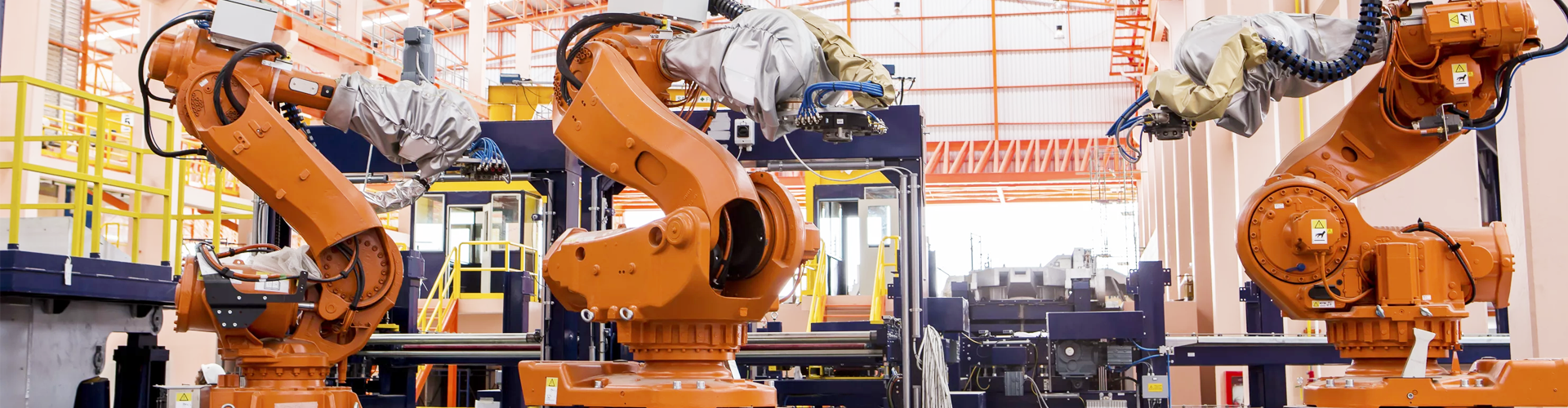
CNC Machine Tending Robot Guide for Loading, Unloading, and Automated Production
Learn how to choose a CNC machine tending robot for automatic loading and unloading of lathes, milling machines, and machining centers. Compare payload, reach, gripper design, controller signals, and safety layout.
Case description
CNC Machine Tending Robot Guide for Loading, Unloading, and Automated Production
Many CNC workshops lose valuable spindle time because operators must manually load blanks, close doors, start cycles, unload finished parts, and repeat the same actions for every batch. A CNC machine tending robot automates this repetitive workflow by handling parts between trays, conveyors, CNC lathes, milling machines, and machining centers. For factory owners and automation engineers, the goal is not only labor reduction, but also higher machine utilization, stable cycle rhythm, and fewer handling errors.
This guide explains how to choose a robot for CNC loading and unloading, what technical specifications matter, and how to plan a practical machine tending automation project.

What Is a CNC Machine Tending Robot?
A CNC machine tending robot is an industrial robot arm used to load raw parts into a CNC machine and remove finished parts after machining. It can work with CNC lathes, vertical machining centers, drilling and tapping machines, turning-milling centers, and other machine tools.
SZGH provides robot arms through its Robot Arm product category including general-purpose robots, compact robots, collaborative robots, and handling robots. For CNC automation, the robot must be selected together with the machine tool, gripper, feeder, fixture, controller signals, and safety system.
A CNC machine tending robot can support:
- CNC lathe loading and unloading
- Milling machine part transfer
- Machining center automation
- Dual-machine tending
- Blank feeding and finished part stacking
- Part inspection transfer
- Night-shift or low-manpower production
Why CNC Machine Tending Automation Improves Productivity
A CNC machine can only produce parts when the spindle is running. If the machine waits for an operator, the factory loses production time even when the equipment itself is capable of higher output.
Machine tending automation helps factories:
- Reduce idle time between machining cycles
- Maintain stable loading rhythm
- Improve operator efficiency
- Reduce repetitive manual handling
- Support longer unattended production windows
- Lower risk of incorrect part placement
- Improve consistency in batch production
For high-volume parts, even a small reduction in loading and unloading time can create meaningful production gains over hundreds or thousands of cycles.
Choosing the Right Robot for CNC Loading and Unloading
6 Axis Robot Arm for Flexible Machine Access
A 6 axis robot arm is often selected for CNC machine tending because it can enter the machine door, adjust part orientation, avoid fixtures, and place finished parts in organized trays.
The SZGH-T1600-15C general robot for welding and machine tending provides 15 kg payload and 1510 mm reach. It is suitable for loading and unloading CNC machine tools, curved surface processing, thermal handling, and welding-related automation.
A 6 axis robot arm is useful when:
- The machine door position is difficult to access
- The part must be rotated before loading
- One robot tends two machines
- The robot must avoid chuck, turret, vise, or fixture collision
- The production cell may be expanded later
General-Purpose Robot for Handling Multiple Tasks
Some factories need one robot to handle more than loading and unloading. The robot may also transfer parts to a measuring station, place parts on a conveyor, or support deburring and cleaning.
The SZGH-T1600-10C integrated general-purpose robot has a 10 kg payload, 1510 mm reach, and repeatability around ±0.05 mm. It is designed for material handling, welding, assembly, deburring, high-speed picking, stacking, and machine tending.
This type of robot is practical for manufacturers that want one automation platform for different workshop tasks.
Compact Robot for Small CNC Machines
For small parts or compact workshops, a large robot may waste space. The SZGH-T750-B-6 desktop industrial robot provides a 6 kg payload, 750 mm reach, and 6-axis movement. It can be used for material handling, machine management, testing, gluing, and assembly.
A compact CNC machine tending robot is suitable for:
- Small metal parts
- Electronics hardware
- Light fixtures and components
- Desktop CNC equipment
- Training and demonstration cells
- Limited floor space
Comparison Table for CNC Machine Tending Robots
Application | Recommended Robot Type | Key Specifications | Production Benefit |
Single CNC lathe tending | 6 axis robot arm | Payload, reach, chuck access, I/O signals | Reduces manual loading |
Two-machine tending | 6 axis robot with larger reach | Work envelope, cycle time, layout clearance | Improves robot utilization |
Small part loading | Compact industrial robot | Payload, repeatability, footprint | Saves space |
Heavy part loading | Higher-payload robot | Part weight, gripper weight, safety margin | Handles larger components |
Flexible mixed production | General-purpose robot | Programming flexibility, tooling change | Supports more tasks |
Automated line integration | Robot plus feeder and conveyor | Communication, sensors, safety logic | Enables scalable production |
Technical Checklist Before Selection
Payload Calculation
Payload must include the workpiece, gripper, fingers, pneumatic cylinders, sensors, cables, and safety margin. If the finished part is heavier than the blank because of coolant or chips, this should also be considered.
A practical payload calculation includes:
- Maximum part weight
- Gripper body weight
- Finger or jaw weight
- Pneumatic or electric actuator weight
- Sensor and cable weight
- Safety margin for acceleration and posture
Reach and Machine Layout
Reach should cover all required points:
- Raw part tray
- CNC machine chuck or fixture
- Door opening position
- Finished part tray
- Inspection or cleaning station
- Operator service area
Before purchasing, create a simple top-view layout. Include machine dimensions, door travel, robot base position, tray size, and guarding. This helps avoid reach problems after installation.
Gripper Design
The gripper is one of the most important parts of a CNC machine tending robot. It must hold the part securely without damaging the machined surface.
Common gripper options include:
- Two-jaw pneumatic gripper
- Three-jaw gripper for round parts
- Double gripper for faster part exchange
- Vacuum gripper for flat materials
- Magnetic gripper for ferrous parts
- Custom fixture gripper for irregular shapes
A double gripper can reduce cycle time because the robot removes the finished part and loads the next blank in one machine visit.
CNC Controller Communication
Robot and CNC machine communication must be reliable. The system should exchange signals for door open, door close, chuck clamp, cycle start, cycle finish, alarm, and emergency stop.
Automation engineers should confirm:
- Available CNC I/O points
- M-code signal control
- Door control method
- Chuck or vise control
- Part presence sensors
- Alarm recovery process
- Safety interlock logic
This is where a supplier with CNC system and automation experience can reduce commissioning risk.
Practical Case: Automating a CNC Lathe Cell
A factory producing steel shaft parts may use one operator to tend two CNC lathes. Each cycle requires loading a blank, clamping, starting the program, waiting, unloading, and placing the finished part into a tray. During breaks or shift changes, both machines may sit idle.
A CNC machine tending robot can be placed between the two lathes. The robot picks a blank from the feeder, loads it into the first lathe, starts the cycle, then services the second lathe. When machining is complete, it removes the finished part and loads the next blank.
This layout can improve spindle utilization because the robot works with a stable rhythm. Operators can focus on tool wear checks, measurement, material supply, and quality control instead of repetitive loading.
Implementation Steps for Machine Tending Automation
A practical CNC machine tending project should follow these steps:
1. Select a stable part family for the first automation project.
2. Measure part size, weight, and clamping requirements.
3. Confirm CNC machine door, chuck, vise, and I/O conditions.
4. Choose robot payload and reach.
5. Design the gripper and part feeding method.
6. Plan robot base location and safety guarding.
7. Test loading path, clamping confirmation, and unloading path.
8. Optimize cycle time and alarm recovery.
9. Train operators for daily operation and basic maintenance.
For model comparison, buyers can review the SZGH robot arm product catalogand match robot payload, reach, and application type to the production cell.
Purchasing Advice for Factory Owners and Distributors
When selecting a CNC machine tending robot, do not compare robot price alone. The complete system includes robot arm, controller, gripper, fixture, feeder, safety devices, installation, programming, and training.
Factory owners should ask:
- Can the robot reach all machine positions safely?
- Is the payload enough for the heaviest part and gripper?
- Can the system communicate with the CNC controller?
- Is the gripper suitable for both blank and finished surfaces?
- Can operators recover from alarms quickly?
- Is the layout easy to maintain?
Distributors should prepare application packages for common part types, such as shaft parts, disc parts, small hardware parts, and machining center fixtures. This makes it easier for buyers to understand the automation value.
Conclusion
A CNC machine tending robot can help factories improve spindle utilization, reduce repetitive manual loading, and create a more stable production rhythm. The right robot depends on payload, reach, gripper design, CNC communication, safety layout, and the workpiece feeding method.
For flexible machine access, a 6 axis robot arm is usually a strong choice. For small CNC equipment, a compact robot can save space. For workshops that need broader automation, a general-purpose robot can support loading, unloading, handling, deburring, and transfer tasks.
To build a customized CNC loading and unloading automation solution, contact the SZGH technical team or download the robot arm product catalog for model selection support.
Inquiry Message
INQUIRY

Follow us


Fax:+86-755-61885186


what app&We chat ID: +86-18098966732

SZGH group address: Floor 3, Building 5, South Digital Innovation Industrial Base, No. 80, Puxia Road, Liuyue Community, Henggang Street, Longgang District, Shenzhen City, Guangdong Province, China
