
 CH
 INQUIRY

Products
CNC Machine Tool Selection Guide for Turning, Milling, Drilling, and Tapping
Learn how to choose the right CNC machine tool for precision turning, milling, drilling, tapping, and automated production. Compare CNC lathes, milling centers, controllers, spindle power, travel, tool magazines, and integration factors.
Classification:
Product Description
CNC Machine Tool Selection Guide for Turning, Milling, Drilling, and Tapping
Selecting the right CNC machine tool is one of the most important decisions for any factory that needs stable part quality, shorter machining cycles, and better labor efficiency. Many workshops lose production capacity because one machine cannot complete enough processes, the controller is difficult to integrate, or the spindle and tool magazine do not match the actual cutting requirements. A properly selected CNC machine tool can combine turning, milling, drilling, tapping, and automated control into a more predictable production process.
This guide explains how factory owners, automation engineers, industrial equipment buyers, and distributors can evaluate CNC lathes, CNC milling machines, machining centers, and turn-milling compound equipment for real manufacturing applications.
What Is a CNC Machine Tool in Industrial Production?
A CNC machine tool uses computer numerical control to move cutting tools, spindles, worktables, and auxiliary systems according to programmed instructions. Compared with manual machining, CNC equipment provides better repeatability, faster changeover, and more consistent dimensional control.
On SZGH’s product platform, buyers can find multiple CNC machine products, including CNC lathe machines, CNC milling machines, milling machine centers, CNC controllers, servo motors, spindle servo systems, and related automation components. This matters because a complete machining solution is not only the machine body. The controller, servo drive, spindle motor, tool magazine, turret, and feedback system all affect final performance.
A CNC machine tool is commonly used for:
- Shaft and disc part turning
- Mold component milling
- Drilling and tapping metal parts
- Multi-surface machining
- Stainless steel part processing
- Aluminum and copper component production
- High-volume machining with automatic tool change
- CNC automation lines with robot loading and unloading

Main CNC Machine Tool Types and Their Best Applications
Different machining tasks require different machine structures. Choosing only by price or machine size can lead to poor accuracy, low utilization, or difficult commissioning.
CNC Lathe Machine for Shaft and Disc Parts
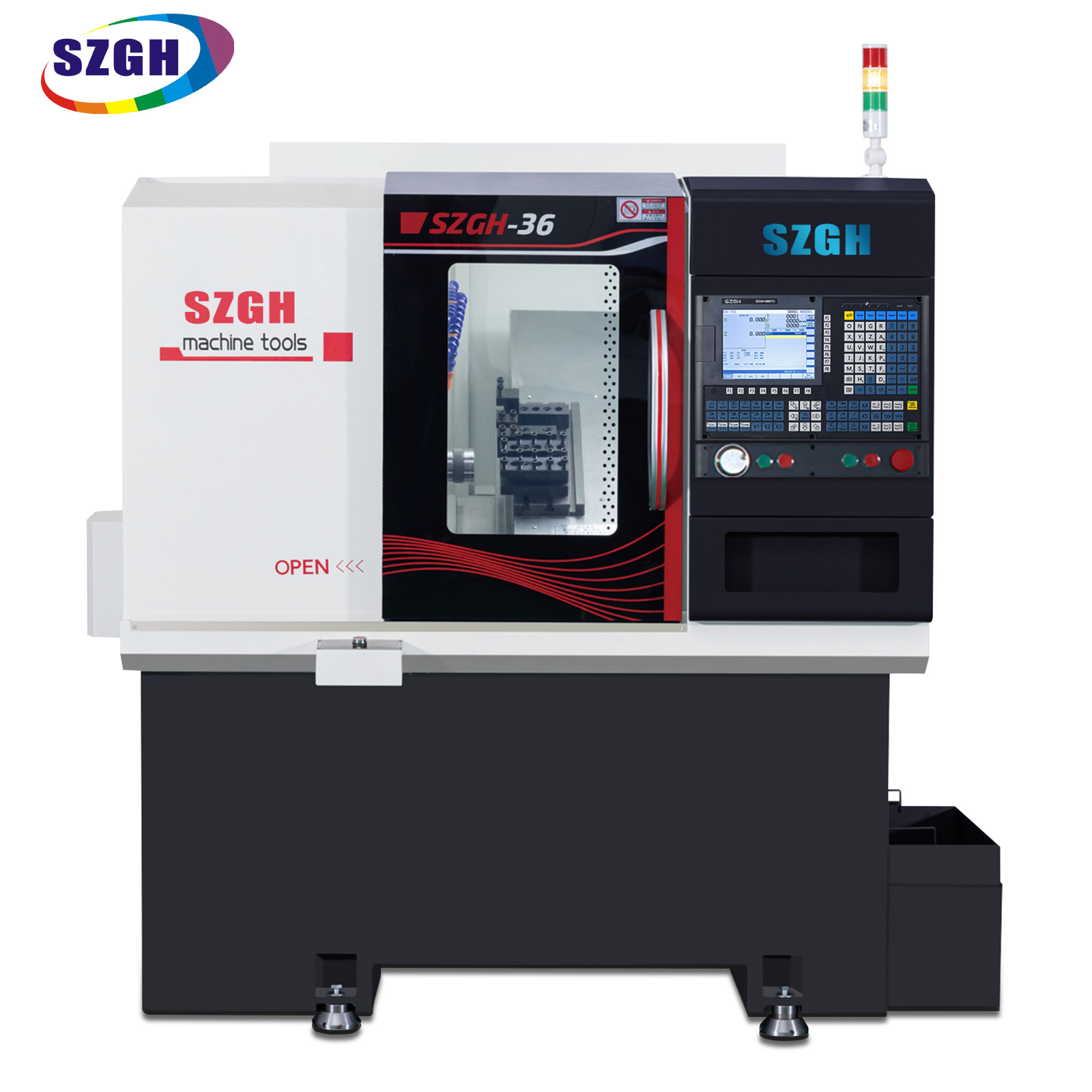
A CNC lathe machine is designed for parts that rotate around a central axis. The workpiece is clamped by the spindle, while the cutting tool moves along controlled axes to perform outer diameter turning, inner diameter boring, threading, grooving, and facing.
For heavy-duty turning projects, the CK6180 CNC lathe machine is positioned for large metal processing. Its configuration includes an 11 kW spindle servo motor, an 8-station electric turret, and a 400 mm 3-jaw manual chuck. These specifications are relevant for buyers machining shafts, pipes, discs, and larger metal components.
A CNC lathe machine is usually suitable when the main process includes:
- Turning cylindrical parts
- Thread processing
- Facing and grooving
- Batch production of shaft parts
- Machining parts with rotational symmetry
- Heavy-duty cutting with stable spindle torque

CNC Milling Machine Center for Multi-Process Machining
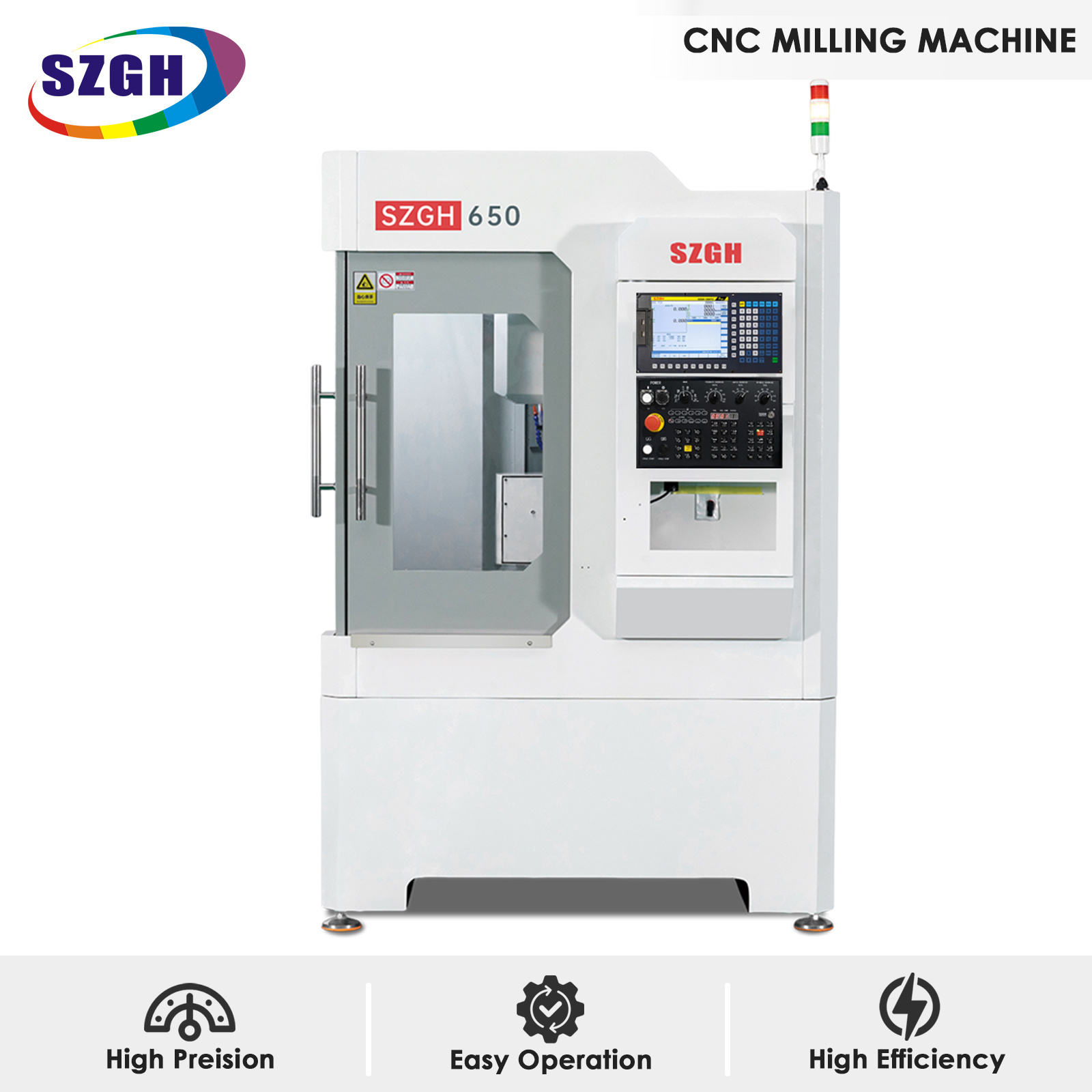
A CNC milling machine center is designed for milling, drilling, boring, tapping, and complex surface machining. It is commonly used when the workpiece requires multiple operations in one setup.
The SZGH-850 CNC milling machine center integrates milling, boring, drilling, and tapping functions. Key specifications include 500 x 800 x 300 mm effective X/Y/Z travel, 7.5 kW spindle motor power, and 10/12 tool magazine options. For factories producing mold parts, machinery components, and precision fixtures, these specifications support higher process concentration.
A CNC milling machine center is a strong choice when the factory needs:
- Multiple machining processes in one clamping
- Automatic tool change
- Complex surface machining
- Drilling and tapping in the same cycle
- Better part consistency across batches
- Reduced manual repositioning

Turn-Milling Compound Machine for Complex Parts
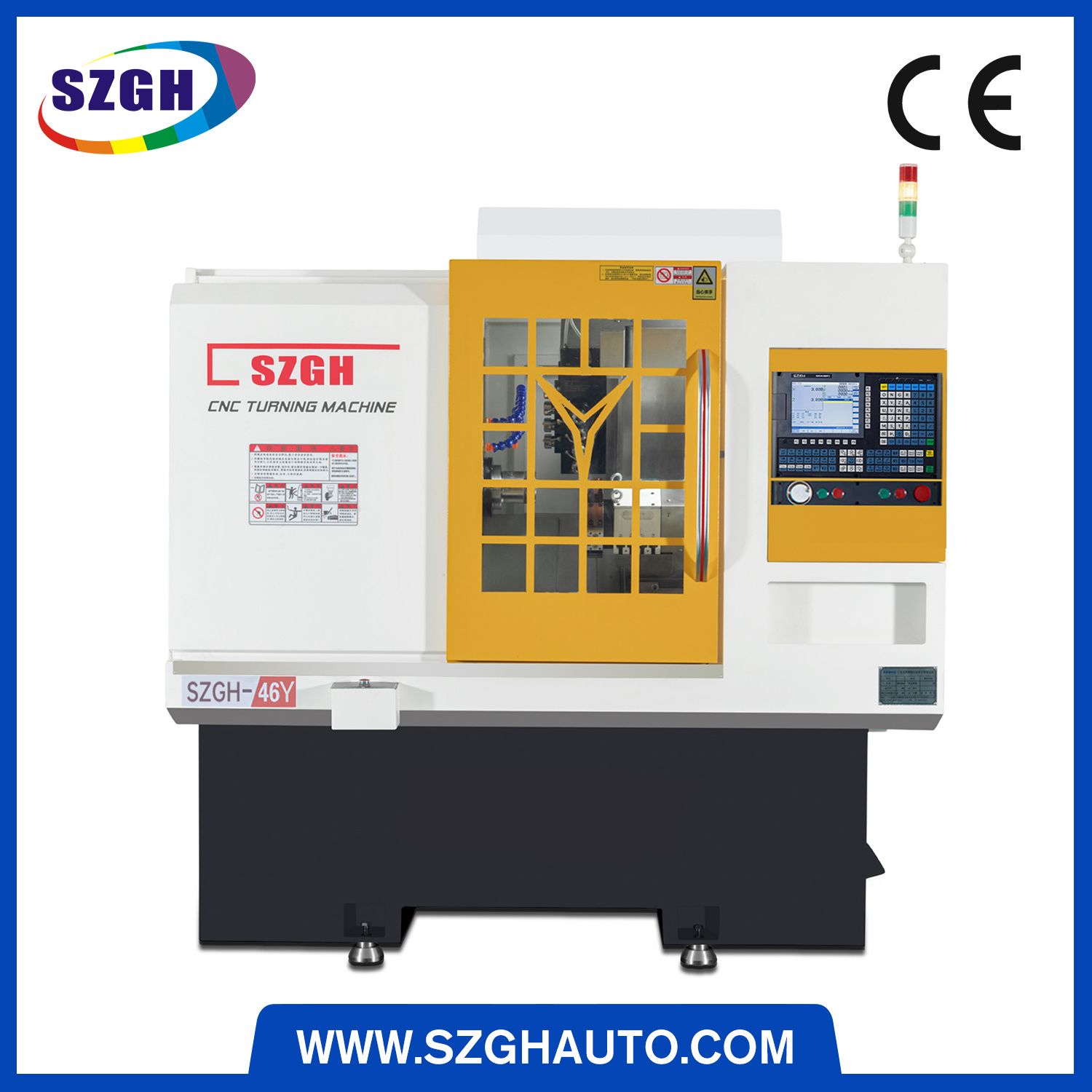
A turn-milling compound machine combines turning and milling functions to complete more processes in one clamping. This is useful for parts that require both rotational machining and side/end milling.
The SZGH-46Y turn-milling compound machine tool is designed for stainless steel parts and thread processing. It includes a 45 mm spindle maximum through-hole diameter, 1000 mm X-axis maximum travel, 400 mm Z-axis maximum travel, 210 mm Y-axis travel, and side 4 plus end 4 power head configuration. For aerospace, automotive, medical equipment, mold manufacturing, and energy equipment parts, this type of CNC machine tool can reduce secondary operations.

CNC Machine Tool Comparison Table
Machine Type | Best Use Case | Key Specifications to Check | Production Benefit |
CNC lathe machine | Shaft, pipe, disc, and threaded parts | Chuck size, spindle power, turret stations, controller axes | Stable turning and batch production |
CNC milling machine center | Milling, drilling, tapping, boring | X/Y/Z travel, spindle power, tool magazine capacity, ATC type | Multi-process machining in one setup |
4-axis CNC machining center | Multi-surface parts and mold work | Rotary table, spindle taper, servo system, positioning feedback | Reduces repeated clamping |
Turn-milling compound machine | Complex parts requiring turning and milling | Y-axis travel, powered tools, spindle bore, CNC control system | Completes more processes in one clamping |
CNC controller retrofit | Machine upgrade or automation integration | Axis support, PLC, macro, I/O, spindle analog output | Improves control and machine flexibility |
Key Technical Specifications Buyers Should Evaluate
Axis Travel and Workpiece Size
Axis travel determines the maximum machining range. For example, the SZGH-850 milling center lists X/Y/Z effective travel of 500 x 800 x 300 mm. Buyers should compare these values with the largest part size, fixture height, tool length, and required clearance.
A common mistake is choosing a machine based only on workpiece dimensions without considering the vise, rotary table, tool holder, and safe movement area. This can reduce usable machining space.
Spindle Motor Power and Speed
Spindle power affects cutting capacity, especially for steel, stainless steel, and heavy milling. A 7.5 kW spindle motor can support a wide range of drilling, milling, and tapping operations when matched with the correct tooling and feed parameters. For turning, an 11 kW spindle servo motor, such as the configuration shown on the CK6180 lathe, is more suitable for larger parts and higher torque requirements.
Buyers should confirm:
- Material type: aluminum, copper, carbon steel, stainless steel
- Maximum drilling diameter
- Tapping size
- Required surface finish
- Cutting depth
- Cycle time target
- Cooling and chip removal conditions
Tool Magazine and Automatic Tool Changer
A machining center is different from a basic CNC milling machine because it can automatically exchange tools. The SZGH 4 Axis CNC milling machine center supports tool magazine configurations such as 12 handles and can use different tool magazine types depending on the CNC system.
Automatic tool change is important when one part requires facing, rough milling, finish milling, drilling, chamfering, tapping, and boring. Without ATC, operators must stop the machine frequently, which reduces spindle utilization and increases the risk of human error.
CNC Controller Capability
The controller determines how well the CNC machine tool executes programs, communicates with auxiliary equipment, and supports advanced machining functions. The SZGH-CNC1000TDb 4-axis lathe CNC controller supports 1-4 axis lathe control, 8-inch 800 x 600 display, PLC and macro functions, automatic tool exchange, dual analog voltage output, C-axis spindle servo support, and multiple servo options.
For automation engineers, controller features are critical because they affect:
- Tool magazine control
- Turret control
- Rigid tapping
- Spindle positioning
- Servo axis compatibility
- I/O expansion
- Machine alarm logic
- Integration with loading and unloading systems
A machine tool with a controller that supports PLC and macro functions can be easier to adapt for customized production lines.
Practical Case: Reducing Setups for Stainless Steel Parts
Consider a factory producing small stainless steel threaded components. A traditional process may require turning on one lathe, transferring the part to a milling machine, drilling side holes, then moving it again for tapping. Each transfer introduces positioning error, operator time, and work-in-process inventory.
A turn-milling compound CNC machine tool can complete turning, milling, drilling, and tapping in one clamping. With Y-axis travel and powered tool positions, the machine can process multiple features without repeated fixture changes. The result is not only shorter cycle time but also better consistency because the part datum remains stable throughout the operation.
For purchasing teams, this means the machine should be evaluated by total process cost, not only purchase price. If one CNC machine tool replaces two or three separate setups, the savings may come from reduced labor, less inspection rework, lower fixture cost, and better delivery stability.
CNC Machine Tool Purchasing Checklist
Before confirming a CNC machine tool order, prepare a technical checklist and share it with the supplier’s engineering team.
- Workpiece material, size, and weight
- Required tolerance and surface finish
- Main process: turning, milling, drilling, tapping, boring, threading
- Maximum drilling and tapping diameter
- Required X/Y/Z travel or turning diameter
- Spindle motor power and torque requirement
- Tool magazine capacity or turret station count
- Controller axis count and programming requirements
- Servo motor and drive configuration
- Need for rigid tapping, C-axis, or rotary table
- Machine footprint and foundation requirements
- Chip conveyor, coolant, and guarding requirements
- Operator language and interface requirements
- After-sales support, training, and spare parts plan
This checklist helps avoid mismatched configurations and supports faster quotation, installation, and commissioning.
Implementation Advice for Factory Owners and Distributors
For factory owners, the best CNC machine tool is the one that matches the real production process and can run reliably with available operators. Do not overspecify functions that will not be used, but do not underspecify spindle power, axis travel, or controller capability if future parts may require more complex machining.
For distributors and system integrators, it is useful to position machine tools by application scenario. A CNC lathe machine can be promoted for shaft and disc parts. A CNC milling machine center is better for mold components and multi-process machining. A turn-milling compound machine is ideal for complex small parts that need both turning and milling.
When the project includes automation, the machine tool should also be evaluated together with robots, feeders, safety devices, and CNC communication. SZGH’s broader product range includes CNC machines, robot arms, CNC systems, servo motors, and spindle servo systems, which can support more complete automation solutions.
Conclusion: Match the CNC Machine Tool to the Complete Process
A CNC machine tool should be selected according to workpiece geometry, material, tolerance, machining process, controller capability, and automation requirements. CNC lathes are efficient for rotational parts, CNC milling machine centers are suitable for multi-process machining, and turn-milling compound machines help reduce setups for complex components.
Before purchasing, compare axis travel, spindle power, tool magazine capacity, controller functions, servo configuration, and support for rigid tapping or automatic tool exchange. A well-matched CNC machine tool can improve machining stability, reduce manual intervention, and support scalable production.
To build a customized CNC machining or factory automation solution, contact the SZGH technical team for model selection support, controller configuration advice, and product catalog information.


Follow us


Fax:+86-755-61885186


what app&We chat ID: +86-18098966732

SZGH group address: Floor 3, Building 5, South Digital Innovation Industrial Base, No. 80, Puxia Road, Liuyue Community, Henggang Street, Longgang District, Shenzhen City, Guangdong Province, China
